Everyday Care
Make a Room Shopping Brief Before Browsing Furniture
Write the problem a purchase must solve and test whether the room already holds an answer.
Read this note →A home, paid attention to
Practical notes for living with old rooms, useful objects and the city outside.
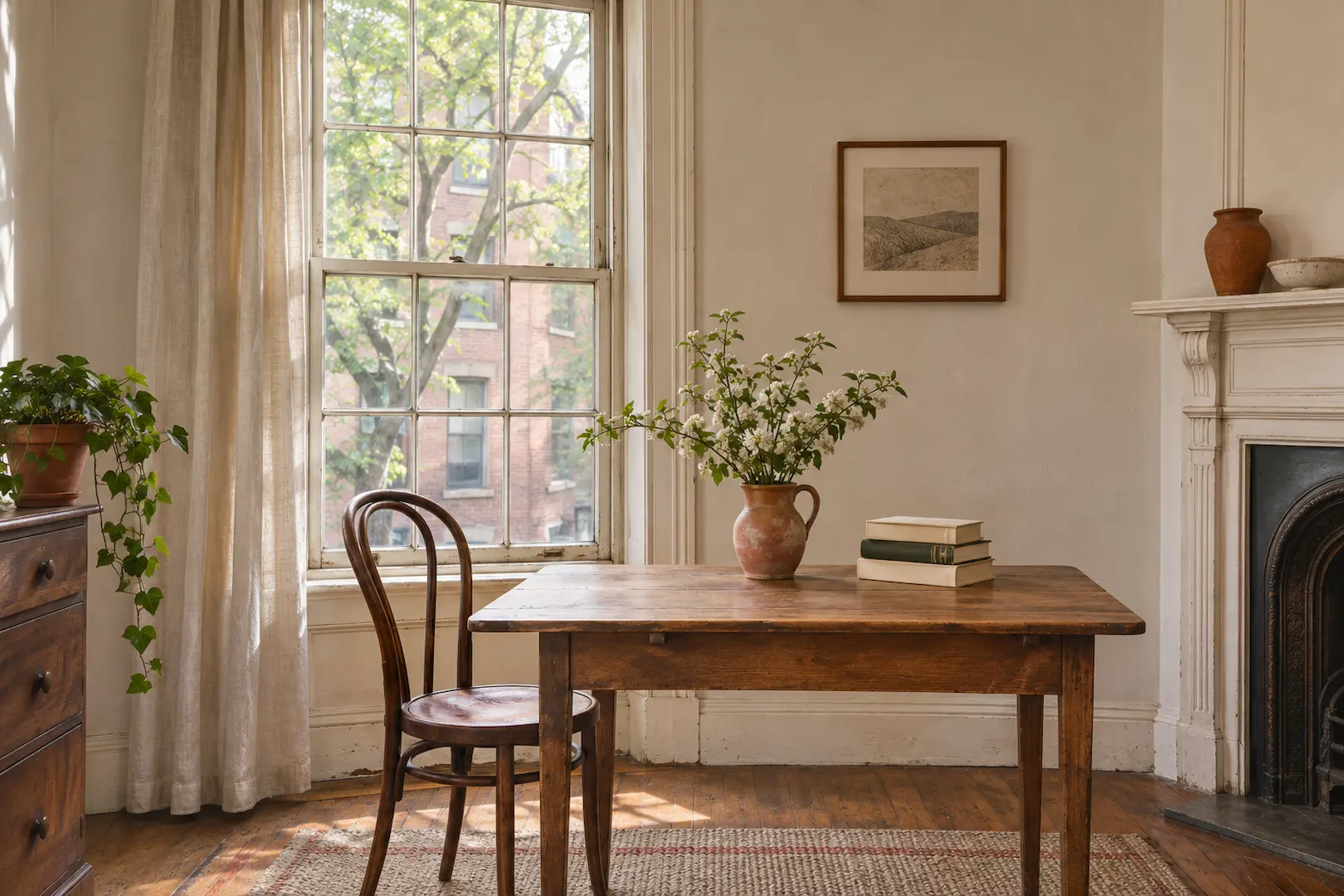
Everyday Care
Write the problem a purchase must solve and test whether the room already holds an answer.
Read this note →Rooms
Plan a long living room around its walking route, then make space for conversation and a second activity without crowding either.
Read this note →Objects
Use a rug, print or favourite ceramic as a starting point without copying every colour in it.
Read this note →Objects
Choose a sensible location, support awkward volumes and build a shelving routine that protects books without turning home into an archive.
Read this note →Objects
Choose a small display, keep the rest findable and separate storage decisions from emotional ones.
Read this note →Everyday Care
Document each window before discussing repair: operation, visible condition, photographs and the questions a specialist needs to answer.
Read this note →Everyday Care
A few consistent photographs and clear notes can turn scattered repair messages into a practical record of an older home.
Read this note →Objects
Choose the arrangement on paper first, then match the hanging method to the wall, frame and permission you actually have.
Read this note →Rooms
Mark the rug's footprint and try the room before choosing a pattern.
Read this note →Everyday Care
Read lumens, colour temperature and fixture limits, then test a small lighting scheme before replacing every bulb in the room.
Read this note →Rooms
Give coats, wet shoes, keys and incoming bags a clear landing place while keeping the route into a small home open.
Read this note →City Notes
Build a flexible neighbourhood walk around the waterfront view, street details and a sensible return route, with room to stop.
Read this note →